

SMART MOVES FOR SENIORS • November 12, 2026
Is a 55+ Community Right for You? Understanding the Pros and Cons
by Jennifer Joyce
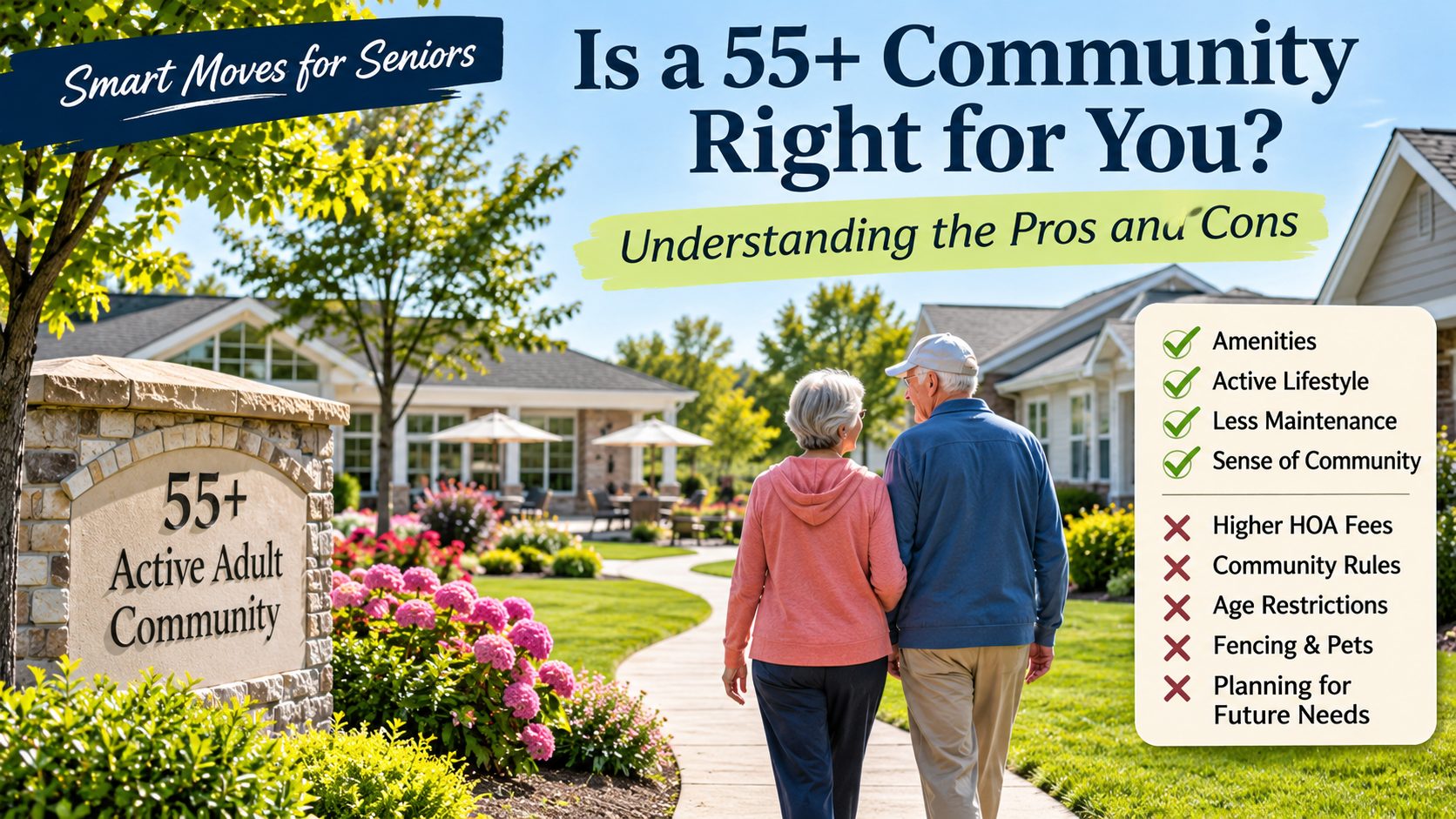
For many older adults, the idea of moving into a 55+ community is appealing. Less time spent maintaining a home, more opportunities to socialize, and access to recreational amenities can make this type of living arrangement an attractive option.
But while these communities offer many advantages, they are not necessarily the right fit for everyone. Before purchasing a home in a 55+ community, it is important to understand what these neighborhoods offer, what restrictions may apply, and how they compare with traditional residential neighborhoods.
What Is a 55+ Community?
A 55+ community, sometimes called an active adult community, is a residential development designed primarily for adults age 55 and older. Unlike assisted living or other senior care facilities, these communities are generally intended for people who can live independently and do not require daily personal or medical assistance.
Homes in these communities may include single-family residences, townhomes, or condominiums. Some feature extensive recreational facilities, social clubs, and organized activities, while others are smaller neighborhoods offering little more than age-restricted housing and shared maintenance services.
Under federal fair housing laws, qualifying 55+ communities must have at least one resident age 55 or older in at least 80% of their occupied homes. However, many communities have stricter requirements, including requiring at least one occupant in every home to be 55 or older. Some allow younger spouses or other family members to live in the home, and some permit a surviving spouse under age 55 to remain after the older spouse passes away. Because these rules vary, buyers should carefully review the community's specific age and occupancy restrictions before purchasing. 24 C.F.R. § 100.305(a) — 80 Percent Occupancy
One important thing to understand is that no two 55+ communities are exactly alike. The homes, amenities, costs, services, and community rules can vary considerably.
The Advantages of Living in a 55+ Community
1. Less Home Maintenance
One of the biggest attractions of 55+ communities is the opportunity to enjoy homeownership with fewer maintenance responsibilities.
Many communities have homeowners associations (HOAs) that handle landscaping, lawn care, snow removal, and maintenance of common areas. Depending on the type of housing, the association may also be responsible for certain exterior repairs and upkeep.
For someone moving from a larger home with a substantial yard, this can mean fewer chores and more time to enjoy retirement, travel, or pursue other interests. However, maintenance responsibilities vary, so buyers should understand exactly what the association handles and what remains their responsibility.
2. Recreational Amenities and an Active Lifestyle
Some 55+ communities offer amenities that make it easy to stay physically and socially active. Depending on the development, these might include swimming pools, fitness centers, walking trails, pickleball or tennis courts, golf courses, and community clubhouses.
Larger communities may also organize exercise classes, hobby groups, educational programs, and special events. Having these opportunities close to home can make it easier to remain active without having to travel far.
Of course, not every community offers these features. Some have extensive resort-style amenities, while others have only a small clubhouse or no recreational facilities at all.
3. Opportunities to Make Friends and Build a Sense of Community
Moving later in life can sometimes mean leaving behind familiar neighbors and social connections. One advantage of an active adult community is the opportunity to meet others who may be at a similar stage of life.
Community gatherings, clubs, group activities, and shared recreational spaces can make it easier to develop friendships and build a new social network. For retirees who no longer have the daily social interactions that come with working, these opportunities can be especially valuable.
Some 55+ neighborhoods develop a particularly strong sense of community, with neighbors looking out for one another and enjoying shared interests. However, the social atmosphere varies, so visiting a neighborhood and speaking with current residents can provide valuable insight into what daily life is really like.
4. Additional Security Features
Some active adult communities offer features such as gated entrances, controlled building access, security patrols, or monitored common areas.
These features may provide additional peace of mind, particularly for residents who travel frequently or spend part of the year away from home.
However, many 55+ communities are not gated and have no special security services beyond those found in traditional neighborhoods. Buyers should not assume that age-restricted housing automatically includes enhanced security.
The Potential Disadvantages of Living in a 55+ Community
1. HOA Fees and Additional Expenses
While reduced maintenance is appealing, it usually comes at a cost.
Most 55+ communities have homeowners association fees that help pay for landscaping, snow removal, shared amenities, common-area maintenance, and other services. Communities with extensive recreational facilities may have particularly high monthly or annual assessments.
Buyers should understand that HOA fees can increase over time and that special assessments may be necessary to cover major repairs or improvements. It is also important to review the association's financial condition, including its budget, reserve funds, and any anticipated capital expenditures.
When comparing homes, consider the total cost of ownership, including property taxes, insurance, HOA fees, and maintenance expenses that remain the homeowner's responsibility.
A smaller home in a 55+ community does not necessarily mean lower overall housing expenses.
2. Rules, Restrictions, and Less Flexibility
Many 55+ communities have detailed rules governing how residents may use and maintain their properties. These may address landscaping, exterior modifications, parking, pets, holiday decorations, and how long guests may stay.
Age restrictions can also create unexpected challenges. For example, what happens if an adult child needs to move back home temporarily? Can grandchildren stay for an extended visit? Is a younger spouse permitted to remain in the home if the older spouse passes away?
For some homeowners, these rules are a benefit because they help maintain the appearance and character of the neighborhood. Others may find them unnecessarily restrictive.
Before purchasing, buyers should carefully review the association's governing documents and understand what they can and cannot do with their property.
3. Limited Ability to Fence in Your Yard
For homeowners with dogs, this can be an important consideration. Many people are attracted to 55+ communities because they want to eliminate the responsibility of mowing the lawn and maintaining their yard. However, they may also want a fenced-in backyard where their dog can safely run and play.
Unfortunately, most 55+ communities prohibit individual yard fencing, particularly when the homeowners association is responsible for lawn maintenance. Fences can make it more difficult for landscaping crews to access and maintain the property, and some associations also restrict them to preserve a consistent neighborhood appearance.
Some communities may offer designated dog parks or other pet-friendly amenities, but others may have no enclosed outdoor areas for pets. Buyers should understand these restrictions before purchasing.
4. Less Age Diversity
Living among people of a similar age can be enjoyable, but it may not appeal to everyone.
Some people appreciate the quieter atmosphere and shared interests that often come with age-restricted housing. Others enjoy living in neighborhoods with children, young families, and residents of different generations.
For someone accustomed to a more diverse neighborhood, a 55+ community may feel less appealing over time. This is largely a matter of personal preference, but it is worth considering before making a move.
5. Smaller Homes and Less Space
Many active adult communities feature homes designed for smaller households, often with fewer bedrooms, less storage, and smaller yards than traditional single-family homes.
For someone looking to downsize, this may be exactly what they want. However, smaller homes can present challenges for those who enjoy entertaining, frequently host overnight guests, or need space for hobbies and family gatherings.
Buyers should also consider whether the floor plan will meet their needs as they age. Features such as main-floor bedrooms, accessible bathrooms, and limited stairs may become increasingly important in the years ahead.
6. Limited Assistance With Daily Living Needs
One of the most important distinctions between a 55+ community and other senior living arrangements is the level of assistance available.
Most active adult communities are designed for independent living. They generally do not provide personal care, medication management, medical services, or assistance with everyday activities such as bathing, dressing, or preparing meals.
Residents who eventually need these services may be able to arrange for outside assistance, but this typically involves additional expenses.
For anyone considering a move intended to last well into their later years, it is important to think about whether the home and community will continue to meet their needs as they age. A community that works well at age 65 may not necessarily provide everything someone needs at 80 or 85.
7. Potential Resale Considerations
Purchasing a home in a 55+ community is still a real estate investment, and buyers should consider what might happen when it is time to sell.
Because age restrictions limit who can occupy these homes, the potential buyer pool may be smaller than for comparable homes in traditional neighborhoods. This does not necessarily mean the property will be difficult to sell or appreciate more slowly, but it is an important consideration.
The community's location, financial condition, amenities, HOA fees, and overall desirability can all influence future resale opportunities. In developments that are still expanding, buyers should also consider whether new construction could compete with existing homes when they eventually decide to sell.
Questions to Ask Before Buying in a 55+ Community
If you are considering purchasing a home in an active adult community, take the time to look beyond the floor plan and attractive amenities.
Some important questions include:
- What are the HOA fees, what do they cover, and have they increased recently?
- Does the association have adequate reserves, and are any special assessments anticipated?
- What maintenance responsibilities will I still have as a homeowner?
- What recreational facilities and organized activities are actually available?
- What are the age restrictions and rules regarding visitors, family members, and pets?
- Are private yard fences permitted, and are there designated areas for dogs?
- Can I make modifications to the property if my needs change as I age?
- Are there restrictions on renting or eventually selling the property?
- How convenient is the location to healthcare providers, shopping, family, and other important destinations?
Whenever possible, visit more than once, explore the amenities, and speak with current residents. A community may look wonderful during a scheduled tour, but it is equally important to understand what everyday life is like.
Is a 55+ Community the Right Choice for You?
For some older adults, moving into a 55+ community offers an ideal combination of independence, convenience, and social opportunities. It can be an excellent way to simplify homeownership while enjoying a more active and connected lifestyle.
For others, the additional fees, community restrictions, smaller homes, or lack of age diversity may outweigh the advantages.
And remember, moving into a 55+ community is not the only way to simplify your living arrangements. A smaller single-family home, condominium, or townhome in a traditional neighborhood may offer many of the same benefits without age restrictions.
The most important consideration is finding a home and community that fit not only your lifestyle today, but also your anticipated needs in the years ahead.
As a Seniors Real Estate Specialist® (SRES®), I help older adults and their families explore housing options, understand the practical and financial considerations of moving, and make informed decisions about their next chapter. Whether you are considering a 55+ community, downsizing to a smaller home, or simply exploring your options, I am always happy to help you navigate the process.
